A Data-First Coral Gables Pricing Strategy for Luxury Homes
What is your waterfront worth per foot, and how much should you credit a recent full renovation? If you are preparing to list a luxury home in Coral Gables, these are not guess-and-check questions. You want a defensible, data-first process that captures every premium without risking extra days on market. In this guide, you will learn a practical way to price your home using local comps, measurable adjustments, and smart presentation that moves the number. Let’s dive in.
Coral Gables has a wide range of luxury properties, from canal-front estates to historic gems and new-construction showpieces. A one-size-fits-all price per square foot rarely works. You need to isolate the factors that the market actually pays for and quantify them with local sales.
Start by defining the luxury set, typically the top 5 to 10 percent of recent sales by price in Coral Gables. Then compare your home only to that set. City and county trend reports from the Miami Association of REALTORS and Florida Realtors help you understand overall inventory, days on market, and absorption so you can position your list price within a realistic range.
Pull the last 12 months of Coral Gables sales and identify the top tier by closed price. This creates a consistent comparison group over time. Revisit the cutoff quarterly so your analysis stays current with market movement.
Use MLS as your primary source for closed and pending sales. For each comp, verify lot dimensions, legal description, living area, and any recorded improvements through the Miami-Dade County Property Appraiser. Confirm waterfront type and linear frontage through parcel maps and surveys. Note the flood zone for every comp using the FEMA Flood Map Service Center.
Create a simple spreadsheet that records sale price, date, living area, lot area, waterfront type, linear frontage, bed/bath count, garage, pool, guest house, renovation status, year built, historic designation, elevation/flood zone, seawall condition, and days on market. Consistent fields let you run clean comparisons and simple models.
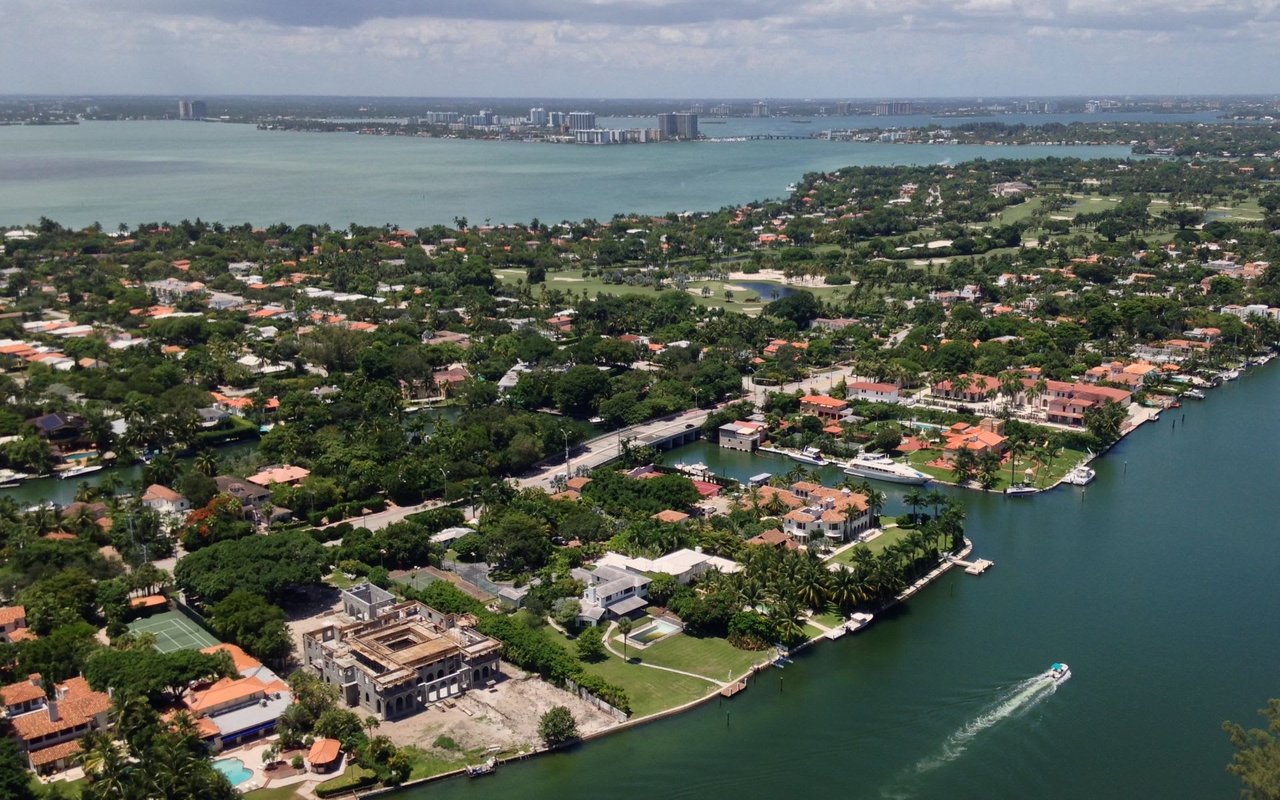
Waterfront in Coral Gables is not one category. Open Biscayne Bay frontage, intracoastal reach, and canal lots trade differently. Buyers also price in linear feet of frontage, navigability, dock size, orientation, and seawall condition. To quantify:
Be ready to adjust downward for flood risk, limited navigability, poor seawall condition, or obstructed views. Confirm flood zones and base flood elevation through FEMA’s map center, and document any seawall maintenance or permits up front to reduce negotiation friction.
A designated historic home can command a premium when provenance and original details are intact and well documented. It can also carry constraints on exterior changes. Pricing should reflect both factors.
In Coral Gables, larger lots often mean privacy, room for guest spaces, and better pool placement. Utility lines, setbacks, tree protections, and lot shape can all affect utility.
Not all upgrades are equal. Buyers in the luxury segment pay for a coherent design narrative and proven mechanical integrity.
A basic log-linear model with variables such as living area, lot size, waterfront status and frontage, renovation level, pool, year built, and historic designation can help quantify premiums. You do not need specialized software. A clean spreadsheet and a statistics add-on are enough to generate coefficients and confidence ranges.
If the sample is small or the homes are highly unique, focus on two to four matched pairs for each key feature. For example, compare a renovated canal-front home to a similar non-waterfront renovated home that sold within the same quarter. Average the observed differences to estimate your adjustment.
Blend the model output with qualitative factors like seasonality, current inventory, and the depth of the buyer pool at your price point. County and metro summaries from Florida Realtors and the Miami Association of REALTORS can inform absorption trends. From there, set a list price near the top of the range if inventory is thin with strong absorption, or closer to the midpoint if supply is higher and DOM is rising.
Test your price with and without key uncertainties. Examples:
This preparation helps you respond to feedback quickly and confidently.
High-end buyers pay for clarity. Assemble a pre-listing packet that includes survey, elevation certificate, permits, mechanical ages, and any seawall, dock, or pool documentation. A clean file reduces contingencies and boosts the odds of clean offers.
Invest in professional photography, including aerials and twilight shots for waterfront orientation. Provide measured floor plans and accurate living area to curb price-per-foot confusion. For remote and international buyers, a 3D walkthrough improves engagement.
Staging helps buyers understand scale and flow. Research from the National Association of Realtors indicates staged homes often sell faster and at higher prices by shaping buyer expectations. In luxury, cohesive design and finish consistency are critical.
Miami luxury demand often swells in fall and winter. Align your go-to-market strategy with seasonal interest and current absorption. A quiet pre-market period to gather feedback can refine your price and reduce time on market once public.
Flood zone and elevation directly affect ownership cost and lender requirements. Identify your zone and base flood elevation with the FEMA Flood Map Service Center. For longer-term considerations, the NOAA Sea Level Rise Viewer shows scenario-based inundation risks. Insurance availability and premiums in Florida are dynamic. Stay current through the Florida Office of Insurance Regulation, and price with realistic assumptions about coverage and deductibles.
Seawall condition and permitted dock dimensions matter to buyers. If the structure needs repair, expect offers to reflect that cost plus disruption. When possible, secure recent inspections or certifications and share them to minimize renegotiation.
If your home is designated historic, set clear expectations about what changes require review and typical timelines. Buyers who value architectural integrity will appreciate the clarity, while buyers who prefer turn-key flexibility will price in the constraints.
Confirm current assessed value, exemptions, and recent tax history through the Miami-Dade County Property Appraiser. If improvements will trigger reassessment, note that for prospective buyers.
Ready to price confidently and sell with speed? Schedule a private, data-first strategy session with the Ben Moss Group to position your Coral Gables luxury property for a premium result.
Ben has built his business by forming long-lasting relationships with his clients through providing diligent and analytical service, impeccable market knowledge, attention to detail and uncompromising ethical standards.
CONTACT US