Pinecrest Estate Home Buying Guide for Luxury Buyers
Finding the right estate-style home in Pinecrest is not just about square footage or a beautiful front entry. If you are buying at this level, you are also buying lot potential, privacy, and long-term usability. In Pinecrest, those details can have a major impact on value, so it pays to look deeper before you make a move. Let’s dive in.
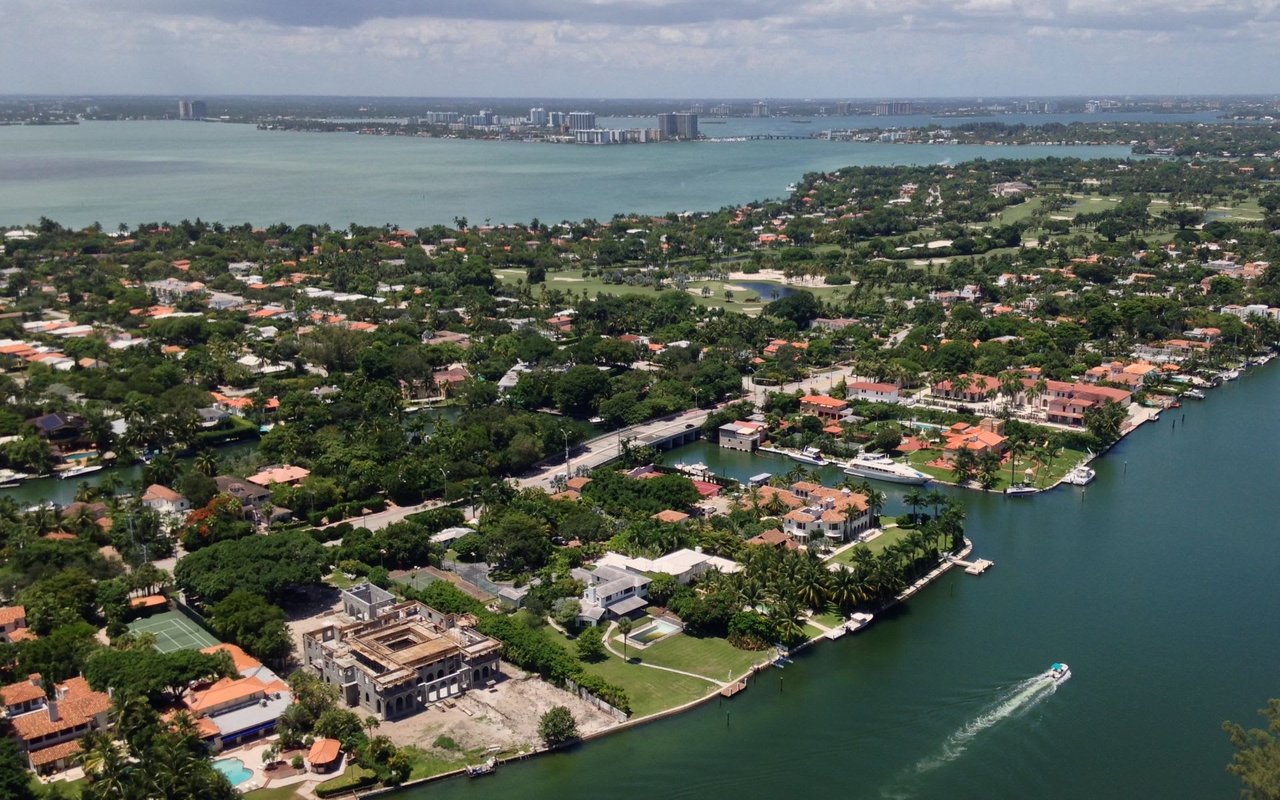
Pinecrest has a distinct residential identity within Miami-Dade. The village has about 18,388 residents across roughly eight square miles, and it is known for its lush setting and strong tree canopy. Since incorporation in 1996, the village reports planting more than 10,000 street trees and has been recognized as a Tree City USA community every year since incorporation.
That setting helps explain why Pinecrest continues to appeal to buyers looking for estate-style homes with privacy and outdoor space. The area’s development history also matters. According to the village, Pinecrest grew significantly in the 1950s and 1960s with ranch-style homes on acre lots, which is a big reason large parcels, deep setbacks, and mature landscaping still shape the market today.
In Pinecrest, estate-style does not point to one single home type. You may see older ranch homes, newer contemporary builds, Mediterranean-inspired residences, and updated midcentury properties. What ties many of them together is the land.
Official zoning patterns show several low-density residential categories that support an estate feel. These include Residential Estate at one unit per 2.5 gross acres, one unit per gross acre, and Residential Suburban Estate at one unit per 25,000 gross square feet. That means two homes can both feel substantial while offering very different levels of privacy, flexibility, and long-term upside.
A large lot may sound simple on paper, but in Pinecrest, the real question is how much of that lot is actually usable. Setbacks, easements, tree restrictions, and flood considerations can all affect what you can do with the property. For that reason, buyers should evaluate parcel geometry, not just acreage.
A wide lot with fewer constraints can be more useful than a larger lot with tighter building limitations. In practical terms, that can affect where you place a pool, whether you can expand the home later, or how much privacy you can create outdoors. When you compare estate properties in Pinecrest, this is often where true value differences show up.
Pinecrest’s zoning standards can significantly affect a home’s buildable envelope. The village’s district table shows 50-foot front and 25-foot rear setbacks in EU-1C and EU-1, 35-foot front and 25-foot rear setbacks in EU-S, and 25-foot front and 25-foot rear setbacks in EU-M.
Those numbers matter because they influence how much of the parcel can actually support a main residence and outdoor improvements. The estate districts also have lower first-story floor area ratios than more intense districts. So even on a generous lot, the amount of house you can build relative to land size may be more limited than expected.
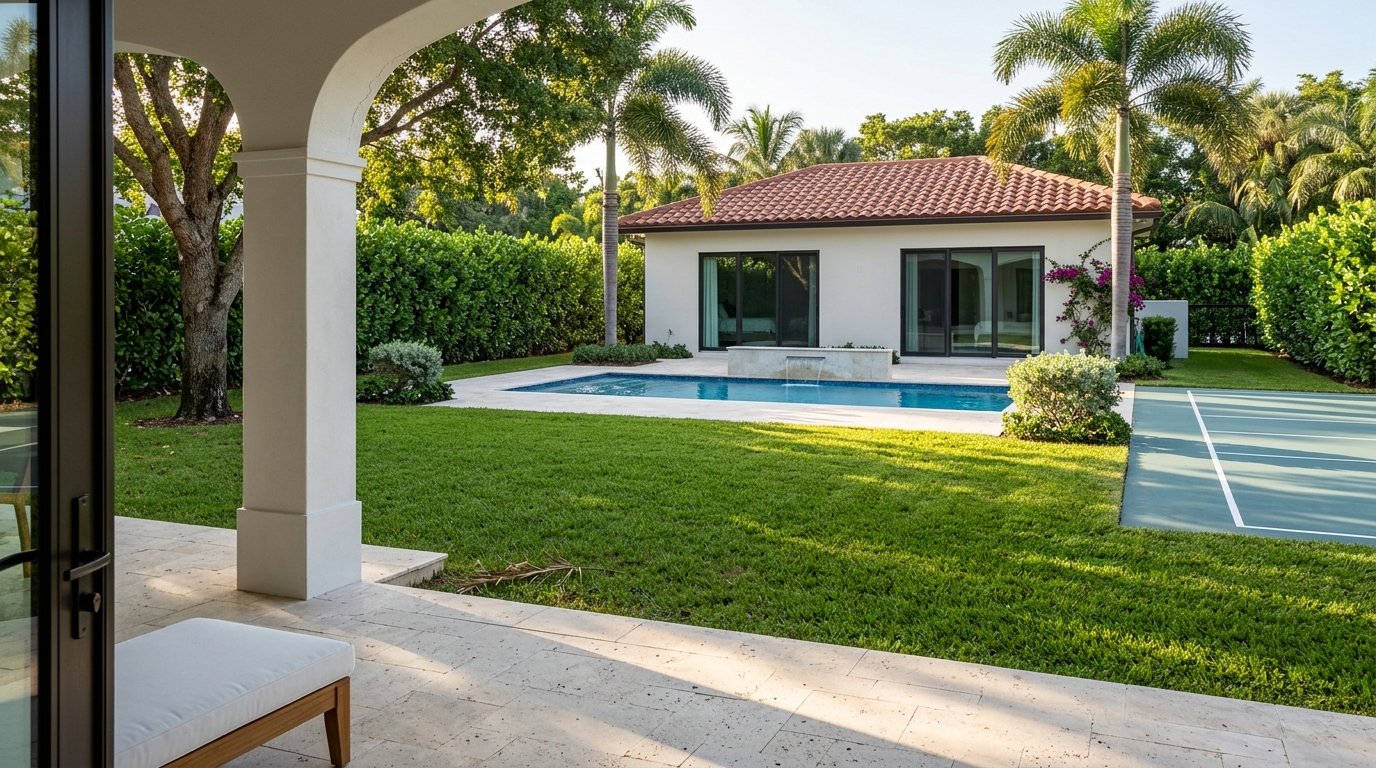
For many buyers, the appeal of a Pinecrest estate is the outdoor lifestyle. Pools, covered terraces, guest accommodations, sport courts, and entertaining areas are often part of the vision. But in Pinecrest, these features are highly site-dependent and permit-driven.
The village’s permit checklist requires attention to setbacks, lot coverage, accessory structures, impervious versus pervious area, flood zone, finish floor elevation, overall height, and pool barrier details such as self-closing and self-latching gates. That means a feature that seems easy to add on one estate lot may be much more complicated on another.
Buyers often assume a larger lot automatically allows a guest house or similar secondary structure. Pinecrest’s residential land-use rules make clear that permitted uses vary by district. The safer approach is to verify what is allowed on the specific parcel instead of relying on the lot’s appearance or size.
If you are buying with a future plan in mind, this step is especially important. The right estate purchase is not just about what exists today. It is also about whether the property can realistically support your next phase.
Adding a pool or court may sound straightforward, but lot coverage and drainage considerations matter. Pinecrest specifically reviews impervious and pervious area during permit review, along with flood-related details. On estate properties, outdoor improvements can add value and enjoyment, but only if the site can support them.
This is one reason experienced due diligence matters before an offer is finalized. You want clarity on what is feasible, not assumptions that become expensive surprises later.
Pinecrest’s mature landscaping is a major part of its appeal, but it also comes with rules. The village requires a tree removal permit for the removal or relocation of any tree that is not specifically exempted. It also defines specimen trees as those over 18 inches in diameter measured at four feet above ground.
For buyers, that creates a balance. Trees can improve privacy, beauty, and shade, but they may also limit future site changes. If your estate vision includes a reconfigured driveway, expanded lawn, or new outdoor structure, tree constraints should be reviewed early.
Not every part of a parcel should be treated as fully private usable yard. Pinecrest states that items placed in the public right-of-way adjacent to the street, including landscaping, sprinklers, and lighting, require a permit. That can affect how you think about frontage improvements or entry landscaping.
If a property includes an FPL easement, the utility may clear obstructions and trim trees within or encroaching on that easement. In other words, part of the lot may look usable today but function differently over time. That should be reflected in how you value the property.
Canal edges can add openness and visual appeal, but they also come with restrictions. The village says canal-adjacent land should be kept clear of trees, shrubs, fences, sheds, decks, and gazebos, though certain play or entertaining structures may be allowed if permitted by the South Florida Water Management District.
For an estate buyer, this is a good example of why the shape and condition of land matter as much as the gross square footage. Two lots may have the same stated size, but very different usable outdoor footprints.
In South Florida, flood diligence should be part of every serious purchase, and Pinecrest gives buyers practical tools to review this. The village offers a GIS Flood Zone Viewer and elevation certificates by address. It also participates in FEMA’s Community Rating System, which the village says helps lower flood-insurance premiums for residents.
This is not just a technical box to check. Flood zone and elevation details can influence insurance costs, future improvements, and the design of outdoor amenities. When you are comparing estate homes, these carrying and development implications should be part of your analysis from day one.
Pinecrest should not be treated as one uniform luxury market. Public market trackers point to a premium market with room for negotiation, but they also show why local comparisons matter. Redfin reports a three-month median sale price of about $2.18 million through April 2026, with homes taking about 106 days on market and selling for about 7 percent below list. Realtor.com reports a median listing price of $3.98 million and a sale-to-list ratio of 95 percent.
Those figures are best used as directional context because they rely on different windows and metrics. What matters more for estate buyers is how one parcel compares to another in the same part of Pinecrest, with similar zoning, lot band, privacy profile, and constraints.
Neighborhood-level pricing inside Pinecrest can vary widely. Realtor.com includes estate-oriented areas such as Helms Country Estates, Pine Tree Estates, Town and Ranch Estates, Oakridge Estates, and Bay Ridge Estates, and reports a $7.475 million median listing price for Helms Country Estates.
That kind of variation reinforces an important point. In Pinecrest, the most useful comparison is often not Pinecrest versus another neighborhood. It is one Pinecrest estate parcel versus another with similar characteristics.
Luxury buyers often focus on acquisition price first, but annual carrying costs also matter. The Miami-Dade County Property Search allows buyers to review ownership history, sales information, assessments, exemption benefits, and taxable value. The Property Appraiser also notes that a change in ownership may reset assessed value to full market value, so current taxes should not be assumed after closing.
Pinecrest also states that it relies almost entirely on residential property taxes and adopted a final fiscal year 2025-26 millage rate of 2.503. The village says its stormwater utility fee is collected on the annual real-estate tax bill as well. For buyers choosing between similarly priced estate homes, those costs can meaningfully affect long-term ownership.
Before you move forward on an estate-style home in Pinecrest, focus on the details that drive long-term value and usability:
Pinecrest’s maps page notes that interactive maps are for general information only and that official zoning or land-use verification should come from the Planning Division. That is a valuable final step when you are evaluating a high-value property with future plans in mind.
Buying an estate-style home in Pinecrest takes more than a quick look at lot size and finishes. The best opportunities usually emerge when you understand how zoning, setbacks, trees, flood conditions, and taxes work together on a specific parcel. With the right guidance and a disciplined review process, you can buy with more confidence and protect both your lifestyle goals and your long-term investment.
If you are considering an estate-style purchase in Pinecrest and want discreet, data-driven guidance, schedule a private consultation with the Ben Moss Group.
Ben has built his business by forming long-lasting relationships with his clients through providing diligent and analytical service, impeccable market knowledge, attention to detail and uncompromising ethical standards.
CONTACT US